Mission Samurai 3 Review
My Mission Samurai 3 test: analysis & comparison
IntermediateMy analysis
My opinion on the Mission Samurai 3
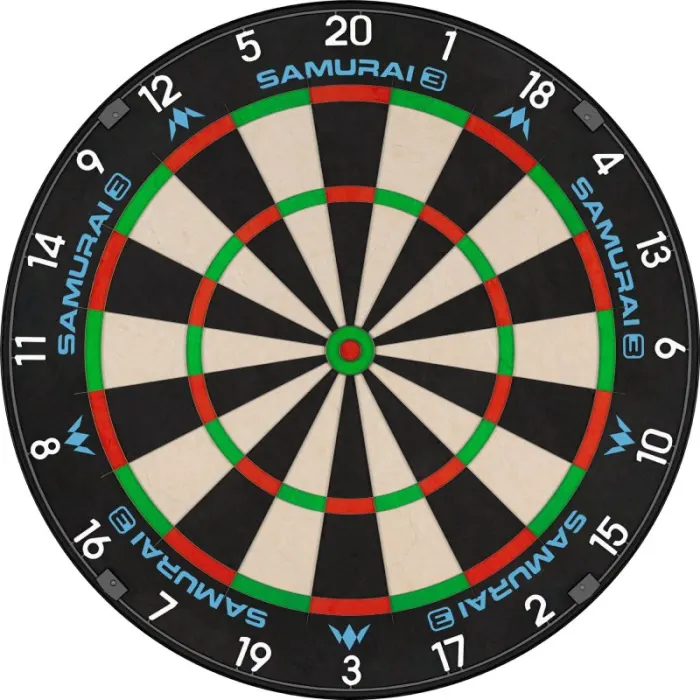
The Mission Samurai 3 marks the start of a new generation for the Samurai range, and you can feel it from the moment you unbox it. Mission has thoroughly reworked the design: an ultra-fine Knife Wire spider, a redesigned black number ring, and symmetrical branding that's more than just a cosmetic detail. It's a board built for intermediate players who want a modern touch without breaking the bank.
What I particularly appreciate is that Mission didn't just change the look: the ultra-fine Knife Wire genuinely changes how the board behaves day to day. You can tell this third generation was designed to fix the friction points of earlier versions while keeping the price accessible.
My test of the Mission Samurai 3 on the oche
On the oche, the first thing that stands out is how fine the spider is. The ultra-thin Knife Wire leaves a generous scoring area, and darts that catch a wire are far more likely to stick than bounce out. The thin wiring limits snags: few surprise catches and few parasitic bounce-outs in what should be a clean zone.
The redesigned black number ring also brings real reading comfort, especially in the evening under artificial lighting, the contrast is sharp and your eyes don't tire after several hours of play. It's the kind of detail that doesn't show up on a spec sheet but genuinely improves the experience game after game.
Durability of the Mission Samurai 3
This is the point where I stay the most measured. The high-quality Madagascan sisal used here does the job honestly, but it doesn't match the premium fibres found on the brand's higher-end models. With regular use, expect more visible wear marks over the months, particularly in the most-used zones (triple 20 leading the way).
Good news: the symmetrical branding isn't just a marketing argument. It lets you rotate the board easily while keeping a consistent visual alignment, which concretely helps spread wear across the whole surface instead of concentrating impacts always in the same spot. That's a real plus for extending the board's useful life between replacements.
Installation and mounting the board
Nothing unusual to report here: the Samurai 3 mounts like a classic sisal board, with no surprises or specific constraints linked to its new design. Since the manufacturer hasn't communicated precise specs (diameter, weight) at this stage, I recommend checking compatibility with your existing bracket or cabinet before buying if you're replacing an older model.
Price and value for money
At a price generally between €75 and €80 (to be adjusted depending on retailers and ongoing promotions), the Mission Samurai 3 clearly positions itself as a mid-range option. For that budget, the ultra-fine Knife Wire and redesigned number ring are solid arguments you don't always find on boards at this price point. Value for money is good, provided you accept the trade-off on durability.
Verdict: should you buy the Mission Samurai 3?
Yes, if you're an intermediate player looking for a modern board that's pleasant to look at and comfortable to play on. Built to standard regulation dimensions, the ultra-fine Knife Wire and symmetrical branding make it a good choice for regular leisure or practice use at home or at the club.
However, if you specifically want a board with a federation seal of approval, keep in mind that no WDF approval is confirmed for the Samurai 3. Within the Samurai range, the Samurai II is the WDF-approved reference. And if durability is your top priority, keep in mind it remains this board's weak point.
Criteria breakdown
Durability
The high-quality Madagascan sisal used is well-made and holds up decently day to day, but it's the weakest point of the Samurai 3 compared to the premium fibres of the brand's higher-end models. The symmetrical branding helps offset this by making it easy to rotate the board and spread out wear, which is a genuine plus nonetheless.
Bounce-out
The ultra-fine Knife Wire spider noticeably reduces bounce-outs thanks to thin wiring that limits parasitic snags. It doesn't quite reach the level of the ultra-thin razor spiders found on premium models, but it remains very convincing for this price segment.
Finish
The redesigned black number ring and symmetrical branding give a clean, modern finish, far from the more austere boards of the previous generation. Manufacturing details are neat, with no rough edges or visible defects to spoil the overall impression.
Visual clarity
The contrast offered by the black ring makes scoring zones much easier to read, including under artificial lighting. It's one of the standout strengths of this new generation, designed to limit eye strain during long sessions.
Pros & Cons
Pros
- Ultra-fine Knife Wire spider that noticeably reduces bounce-outs
- Symmetrical branding allowing clean rotations to spread out wear
- Redesigned black number ring that clearly improves reading comfort
- Modern design marking a genuine generational shift in the Samurai range
- Good value for money for an intermediate player
Cons
- Durability falls short of the brand's premium high-end fibres
- No confirmed WDF approval, unlike the Samurai II (the range's WDF reference)
Frequently asked questions about the Mission Samurai 3
The Mission Samurai 3 introduces a full redesign: an ultra-fine Knife Wire spider that reduces bounce-outs, plus a new symmetrical branding that lets you rotate the board easily to spread wear evenly across the whole surface.
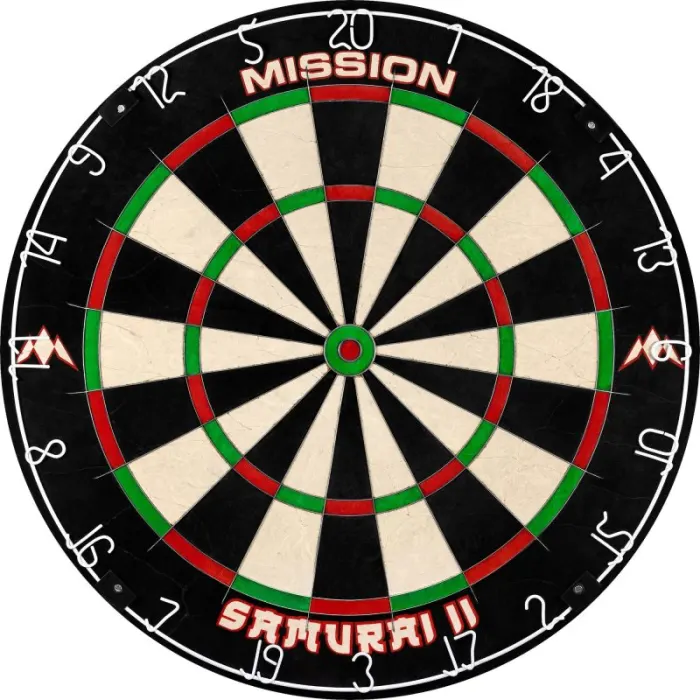
The main difference is certification: the Samurai II is the WDF-approved reference of the range, whereas no WDF approval is confirmed for the Samurai 3. If you want a board with a federation seal of approval, the Samurai II is the one to choose.
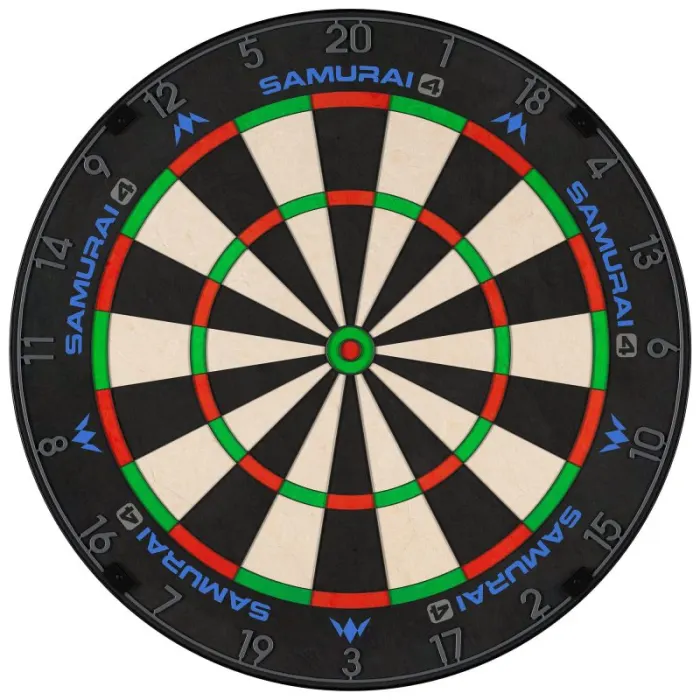
The Samurai 4 sits above it in the range, with more premium materials and construction. The Samurai 3 remains a more accessible option, designed for intermediate players who want a modern design without the budget of a high-end model.
No WDF approval is confirmed for the Mission Samurai 3. It is built to standard regulation dimensions, but if you want a WDF-approved board from the Samurai range, the Samurai II is the reference to choose.
It's aimed at intermediate players looking for a modern, visually comfortable and reliable board for leisure or practice use. Its average price generally sits between €75 and €80 (subject to change depending on retailers).
Player reviews Mission Samurai 3
Write a review
Sign in to leave a review for this product.
Sign inNo reviews yet
Be the first to review this product!